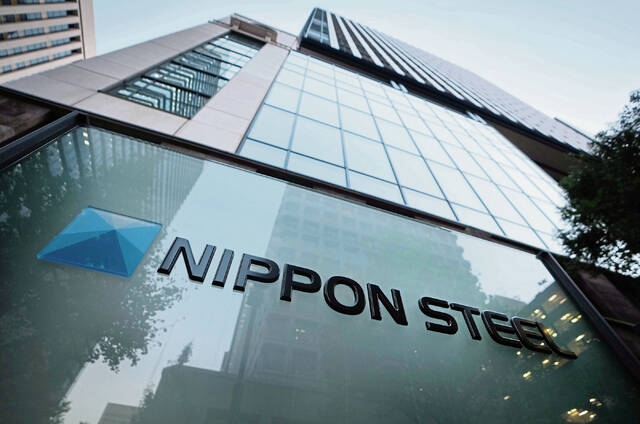
U.S. Steel stockholders Friday voted for the merger with Japanese-based Nippon Steel Corp.
It was not a close decision, with 71% of stockholders voting and 98% of those approving the proposal. For perspective, the last U.S. president to be elected with a margin like that was James Monroe in 1816.
The $14.9 billion deal has been on the table since December. It also has been a focus for political debate.
But is it debate when all the politicians seem to be on the same side?
At the very least, elected officials have talked about fact-finding and engaging with stakeholders. “Stakeholders” is a nice, noncommittal word that doesn’t say whether the focus is on stockholders or steelworkers. Gov. Josh Shapiro was measured in his responses about growing industry and protecting jobs.
Others have been harder on the idea — and, unlike so much, it hasn’t been along political lines. Democrats and Republicans alike have been questioning, skeptical or hostile to the proposal.
Democratic U.S. Sen. John Fetterman famously started his political career as the mayor of Braddock, where U.S. Steel’s Edgar Thomson plant is. He was adamantly against the merger, largely on behalf of the workers who could be affected. U.S. Sen. Bob Casey, D-Scranton, called it a bad deal for Pennsylvania.
The two, as well as U.S. Rep. Chris Deluzio, have urged U.S. Treasury Secretary Janet Yellen, chair of the Committee on Foreign Investment, to block the sale on national and economic security grounds.
U.S. Sen. J.D. Vance, R-Ohio, released a letter he wrote to U.S. Steel leaders ahead of the vote in which he said he believed stockholders were being misled. Both President Joe Biden and GOP frontrunner Donald Trump, who agree on almost nothing, spoke out against the deal.
There are real questions, and the stockholders vote does not change that. The interests of those who own stock in U.S. Steel are not the same thing as the best interests of the union workers — let alone the best interest of a nation with infrastructure needs that could depend heavily on domestic steel. When speaking at the site of the collapsed Francis Scott Key Bridge in Baltimore, Biden pledged to rebuild it with union labor and American steel.
While the approval of the stockholders might seem to be the acceptance that completes the deal, it isn’t. There are still governmental hurdles to the process. In an election year, they are unlikely to move quickly.
And it will continue to be a political sticking point — even though everyone is arguing for the same thing. With the strategic importance of steel, the massive amount of money in play and thousands of jobs in Pennsylvania — a critical electoral state — in the balance, the stockholders’ approval matters, but it is hardly the deciding vote.