Low prices are big business.
For years, more low-cost food options have been popping up like mushrooms. They dot urban areas, suburbs, rural landscapes and food deserts.
It has been a growth retail area with a long-term plan. Dollar Tree has been adding refrigerator and freezer sections, particularly in areas where people have more restricted access to a full-blown grocery store. Dollar General stores are getting larger, and their floor plans are devoting more square footage to grocery products.
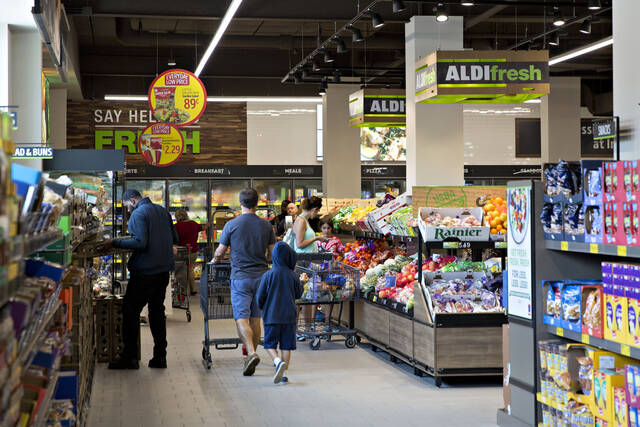
And then there’s Aldi. The discount supermarket started in Germany and opened its first U.S. location in 1976. In the almost 80 years it has been operating, Aldi has made its founders billionaires and kept food on a lot of low-income families’ tables. It also has made people really aware of the value of a quarter — the coin you need to rent a cart and the coin you get back when you return that cart.
In the past month, Aldi has announced two new stores in the area. One will be on Tarentum Bridge Road in New Kensington. The other will be in Natrona Heights.
It’s safe to say that people are interested.
It might be, in part, because of inflation that has been upping prices. The Wall Street Journal has put food prices at 49% above where they were in May 2020 and at their highest point since 2011. If a $100 food bill is now $150 — or stayed the same but meant less food coming into the house — a discount grocery store might seem like a godsend.
But this expansion is more than just a pandemic reaction, and dismissing it as such doesn’t help fix the problem.
Family Dollar, Dollar Tree and Dollar General have been building their brands for years, making themselves indispensable in areas where people haven’t been able to depend on access to grocery stores or the ability to pay more than the bare minimum for food. Among the three chains, there are more than 30,000 stores nationwide. All three plan more development in 2022.
On the internet and social media, videos and groups dedicated to desperation-level cooking budgets are racking up millions of views. People are turning it into a challenge, seeing how little they can spend on a week’s meals or how much they can wring out of $5 or $10 or $20.
Inflation is easy to blame because it plays to our us-vs.-them defaults. It quickly becomes political.
But when you look at the way discount food access has been spreading and compare it to the information about food insecurity, it is evident this is an issue that spans more than a few presidents or governors and affects the lives of a whole lot of people.