The Penn Hills School District finds itself in dire financial straits. And it now must execute a state-overseen financial recovery plan. A significant tax increase and layoffs are possible.
But had taxpayers been given the direct oversight they deserve, the situation might be different, say two researchers at the Allegheny Institute for Public Policy.
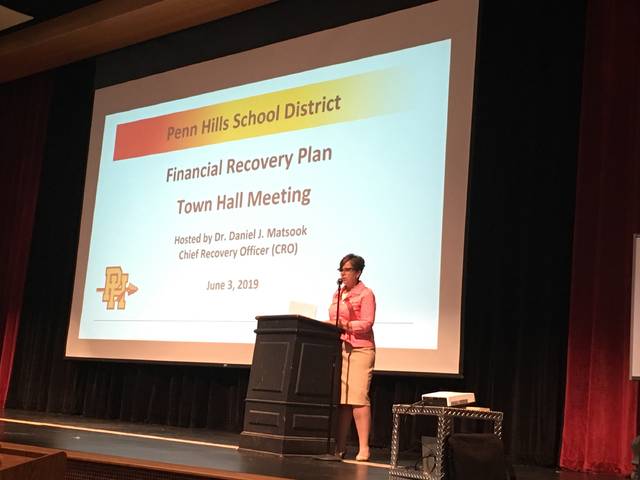
It was in January that Penn Hills joined five other Pennsylvania school districts in recovery. Under Act 141 of 2012, the district met the criteria of a decreasing fund balance, running a deficit in three consecutive years and a 10%-plus delinquent tax collection rate.
“Much of the district’s financial difficulties are traced to the construction of new schools,” remind Eric Montarti, research director of the Pittsburgh think tank, and Hannah Bowser, a research assistant there.
Those projects primarily are blamed for Penn Hills’ current $172 million debt.
District officials expected the new physical plant would entice students to return from charter and parochial schools. That never happened. In fact, from the 2008-09 school year to 2018-19, in-house enrollment fell by 32 (from 4,972 to 3,360) while charter school enrollment increased from 479 to 833 (a 73% jump).
“Clearly district residents with school-age children are looking for something besides new buildings,” Montarti and Bowser say.
Penn Hills’ school taxes did not rise during the construction period. But they have risen five consecutive years since a downward adjustment for the 2013 court-ordered countywide reassessment. And a variety of other district metrics are not flattering.
Outstanding bond principal is higher than a county peer group. Per-pupil spending was second highest (at $21,145 in 2017-18); growth in that category was third highest in the same period.
Additionally, Penn Hills spends more than the Pennsylvania average on per-pupil total spending and higher than the commonwealth’s average for instruction costs and support services.
And as so often is the case, that higher spending has not translated into higher academic achievement. As but one example, the number of Penn Hills eighth-graders performing at the PSSA’s proficient or advanced level in language arts was a paltry 35.7%. The state average for 2017-18 was 61.5%.
The recovery plan and the district’s 2019-20 budget go before the school board for a June 24 vote. The recovery plan calls for Penn Hills to “change how it does business, how it compensates its workforce, how it educates its children, and how it charges taxpayers to do so.”
Up to 55 staff furloughs, a real estate tax increase in excess of 6% and program cuts are on the budget table.
“As we have recommended previously, increases to existing taxes should be subject to approval by taxpayers in a referendum,” Montarti and Bowser note.
“Perhaps Penn Hills voters could have set the district on a different path if they had been given the chance for an up-or-down vote on school construction based on a clear explanation of the purported benefits backers envisioned,” the researchers conclude.