
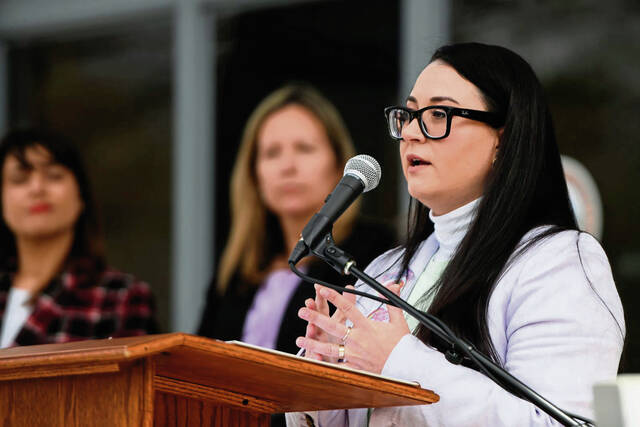
Allegheny County health authorities on Wednesday rejected the federal government’s new childhood vaccine guidelines, promising to stick with the science on immunization practices.
“Departing from long-standing, evidence-based recommendations deters public trust and weakens the very foundation of public health that communities rely on in moments of uncertainty,” Allegheny County Public Health Director Iulia Vann said.
The agency issued a joint statement with the Allegheny County Medical Society and the Allegheny County Immunization Coalition.
The rebuke comes two days after the Centers for Disease Control and Prevention slashed the number of shots broadly recommended for kids to 11, down from 17 at the end of 2024.
Immunizations against hepatitis A, hepatitis B, meningococcal disease, rotavirus, influenza and respiratory syncytial virus should be given only to high-risk children or as part of individualized parent-doctor discussions, the federal agency said.
Its acting director, Jim O’Neill, did not cite any new data or research in his decision.
These are merely guidelines, and insurance coverage through private companies, Medicaid, the Children’s Health Insurance Program and the Vaccines for Children Program remains intact.
The county will also continue to offer all previously recommended childhood vaccines through its immunization clinic in Downtown Pittsburgh.
But the new guidance, which defies most major medical organizations, will still do harm by confusing parents and doctors, according to county medical experts.
“The practical concern is not whether vaccines remain technically available,” they said. “It is how changes in recommendation structure alter uptake, timing and equity in real world systems.”
Universal approaches are “among the most effective and equitable tools in public health,” the experts added, reducing missed opportunities for prevention and protecting children during their most vulnerable periods.
U.S. health authorities, led by Health and Human Services Secretary Robert F. Kennedy Jr., say the vaccine changes better align the country with other wealthy nations — specifically Denmark, which universally recommends just 10 shots.
“Coupled with an evaluation of potential vaccine harms, this reform seeks to restore public confidence, provide much-needed clarity for parents of young children and preserve the benefits of immunization programs,” federal scientists wrote in a recent report.
The county statement cautions international comparisons may fail to account for significant variations in health care systems, public health policies and trust in authorities between countries.