

BETA SITE | REPORT ISSUES / GIVE FEEDBACK

Westmoreland

North Huntingdon man among a dwindling number of World War II vets

Joe Napsha
By Joe Napsha
3 Min Read Oct. 11, 2023 | 2 years Ago
Go Ad-Free today

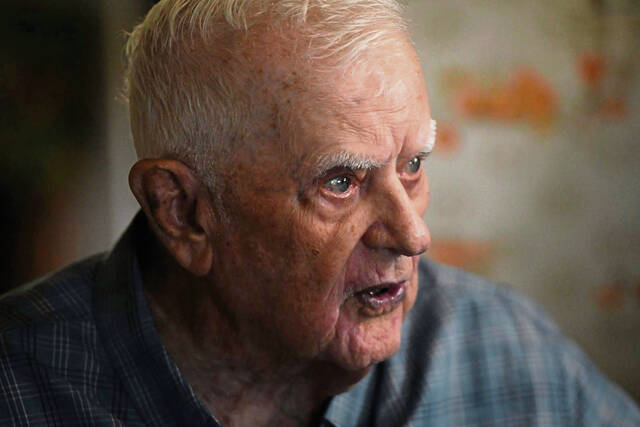
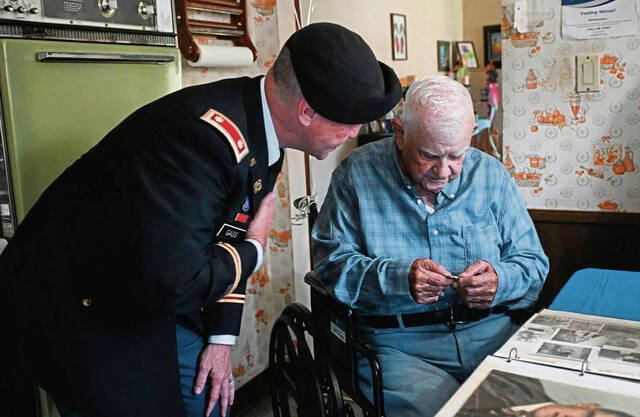
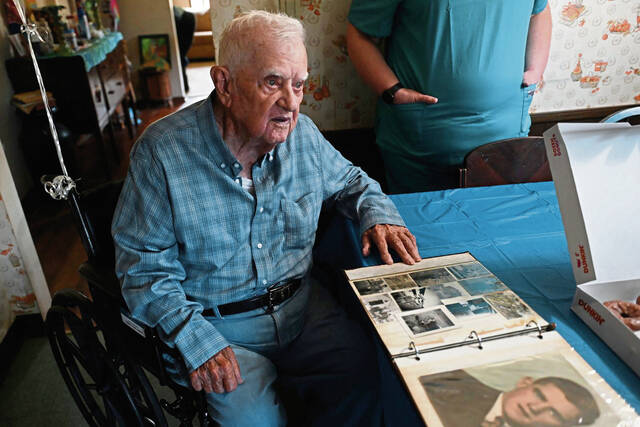
Robert “Bob” Zaval of North Huntingdon, saw the horrors of war as an Army tank commander fighting in Europe during World War II.

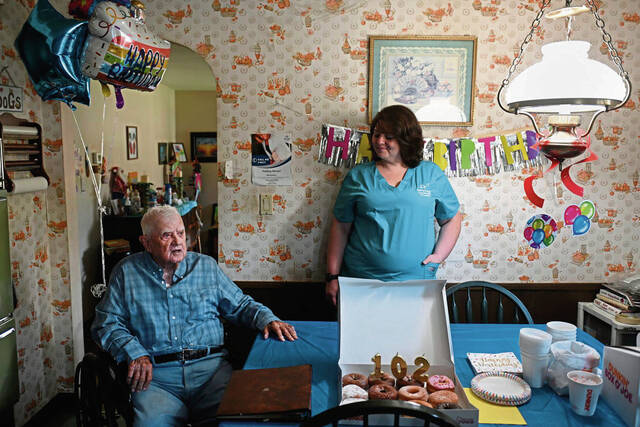
“Boy, it was tough. Your biggest thing was to stay alive,” said Zaval, who recently reflected on his long life before marking his 102nd birthday on Tuesday.

Like many other combat veterans, he does not consider himself a hero. He survived battles in Belgium, Holland, France, Germany and Yugoslavia.

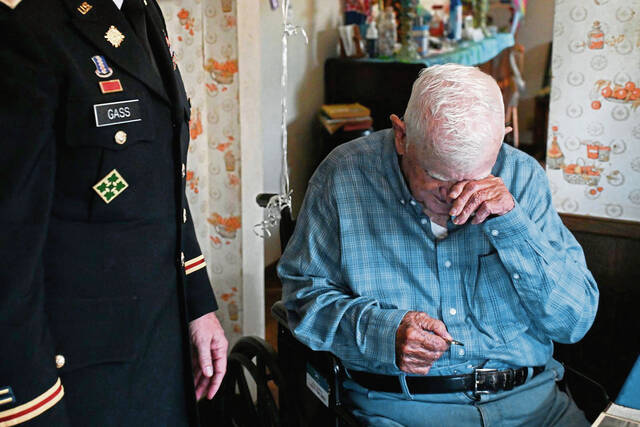
“The real heroes are the ones who are still over there … who never came home,” Zaval said.

Zaval is one of a dwindling breed. Of the more than 16 million Americans who served in the military during World War II, the U.S. Department of Veteran Affairs estimates that only about 120,000 remain alive eight decades after the end of the conflict. Of the Pennsylvanians who served during that war, only about 7,030 were alive this year, according to the VA.

Zaval remains in the modest home he built on Lincoln Way, which he shares with his wife, Helene. He remains mentally sharp and uses a wheelchair to get around.

Zaval, who shortened his name from Zavalydriga, is the father of three children.

Zaval entered the “real world” after graduating from Norwin High School in 1939, part of the nation’s last class of high school graduates before war broke out in Europe in September 1939. With America on the sidelines of the conflict between Nazi Germany and England and France, Zaval landed a job as a steelworker at Fort Pitt Steel Casting Co. in McKeesport.

Anti-war sentiment grew in some segments of society, with an America First movement against any involvement in Europe’s war, but Zaval was not so certain the country would not be dragged into conflict.

“I thought we would get involved,” Zaval said.

Zaval had received some deferments from the military service in the early years of the nation’s involvement that began on Dec. 7, 1941, because his job at Fort Pitt Steel Casting was considered part of the defense industry. But he was called up for duty in 1944.

“You’re glad you did something in the war,” Zaval said.

His experience in the Army got him thinking about continuing his military service after the war was over.

“I was thinking of staying in the Army, if I had not been married,” Zaval said.

His belief in the benefits of military service remains with him.

“Every young man should have a year of military service,” Zaval said.

He returned home to his job at Fort Pitt Steel Casting, where he worked for 43 years, and raised a family.

After spending time cooped up inside a tank during the war, Zaval wanted to soar in the sky and learned to fly at age 50. He bought a small plane even before he had his pilot’s license.

“I loved it. When you are up there by yourself, you are it. Don’t make a mistake,” Zaval said.

He attributed his longevity to his wife, Helene, who has helped him, as well as the choices he has made in his life.

“Don’t drink or smoke. Treat people like you want to be treated.”

Share

Tags:

About the Writers

Joe Napsha is a TribLive reporter covering Irwin, North Huntingdon and the Norwin School District. He also writes about business issues. He grew up on Neville Island and has worked at the Trib since the early 1980s. He can be reached at jnapsha@triblive.com.

Article Details

Veteran retains vivid memories of WWII service Robert Zaval’s World War II memories remain vivid despite the passage of time:…

Veteran retains vivid memories of WWII service
Robert Zaval’s World War II memories remain vivid despite the passage of time:
• Being drafted into the Army in 1944 and leaving from the Greensburg Train Station on a Pennsylvania Railroad troop train the same day he entered the service. So unexpected was his immediate departure that he had to call someone to pick up his car from the train station.
• Enduring a nerve-wracking crossing of the Atlantic Ocean in 1944 on the French liner Louis Pasteur that frequently altered course to avoid being torpedoed by a German U-boat. “I was seasick. I was worried about getting sunk by a submarine. I wasn’t playing cards below deck.”
• Landing in Le Havre, France, and encountering inhabitants bitter over the heavy Allied bombing of the city in the summer of 1944 that was aimed at eliminating the German fortress in the port city.
• Battling the superior German tanks with thicker armor than his Sherman tank. “The only way we could stop them was to hit the tread.” If that did not work, they called in the Army Air Forces to attack the tanks from the air.
• Serving under Gen. George S. Patton with the 3rd Army, on a mission to break the German siege of Bastogne, Belgium, where paratroopers were surrounded during the Battle of the Bulge in December 1944. “We were rushing to get there,” which they succeeded in doing to reinforce the beleaguered paratroopers. Patton, he said, “was a mean man, but he was the best general.”
• Crossing the Rhine River into Germany and seeing the bodies of so many people who were killed and German towns where the Nazi flags were replaced by the white flag of surrender. “The Germans were bombing their own towns,” that were captured by the Americans.
• Encountering German-held prisoners of war, whom he described as being “skin and bones” from their captivity. “I gave them everything I had.”
• Objecting to the mistreatment by some American soldiers of starving German children during the occupation after the Nazi surrender in May 1945. With tin cans, they searched for scraps of food tossed out by the soldiers.
• Coming home on the Queen Mary, with thousands of other soldiers in very cramped quarters. “They drained the swimming pool so they could put tables in it to feed the soldiers.”

Push Notifications

Get news alerts first, right in your browser.

Enable Notifications

Content you may have missed

Enjoy TribLIVE, Uninterrupted.

Support our journalism and get an ad-free experience on all your devices.

  • TribLIVE AdFree Monthly

    • Unlimited ad-free articles
    • Pay just $4.99 for your first month
  • TribLIVE AdFree Annually BEST VALUE

    • Unlimited ad-free articles
    • Billed annually, $49.99 for the first year
    • Save 50% on your first year
Get Ad-Free Access Now View other subscription options