If you’re a “lawn lover” who’s been trying to get rid of the clover in your lawn, it’s time to change your tune. Up until the 1950s, white clover was included in every lawn seed mixture. Clover and turf grass went hand-in-hand. Having a lush, clover-infused lawn was thing of pride.
Unfortunately, with the invention of lawn weed killers, clover has somehow come to be perceived as an enemy of turf grass. But, as you’re about to learn, clover is far from being an enemy of the American lawn.
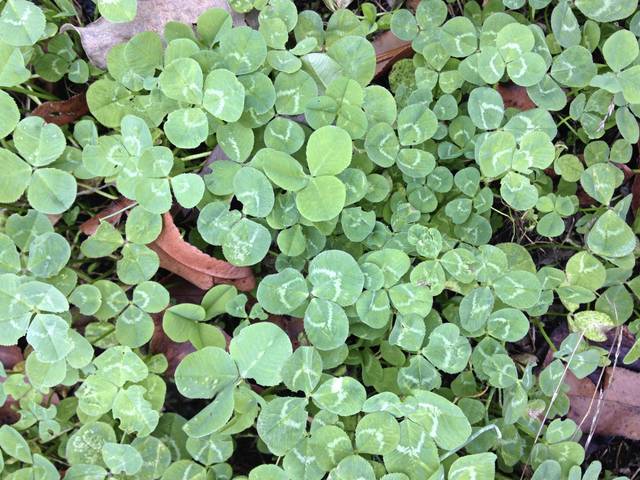
White clover, Trifolium repens, is a member of the pea and bean family, which makes it a legume. Legumes have a unique ability in the plant world. They can take nitrogen from the air and convert it into a form that plants can use to fuel their growth. It’s a process called nitrogen fixation, and it’s incredibly important.
How it works
In order for nitrogen fixation to occur, leguminous plants like clover require a partnership with a specialized bacteria within their roots. The bacteria colonize the roots of these plants and form nodules on them. In exchange for sugars produced by the plant, inside the nodules the bacteria convert nitrogen from the air into compounds that their host plant and other nearby plants can use to fuel growth, development and reproduction.
This symbiotic relationship happens only in these specialized root nodules. When a leguminous plant dies and decomposes, the usable nitrogen within that plant and the nodules on its roots becomes available to future plants grown in that same area. But, nitrogen-fixing legumes can also share nitrogen with other plants while they’re still in a living state. This nitrogen is shared in a few different ways.
First, fixed nitrogen can enter the soil via root exudates or by the frequent death of nodule-containing roots throughout the growing season. Secondly, nitrogen fixed by a legume can also be shared with neighboring plants via the network of underground fungus that exists in the soil around plants. This nitrogen transfer happens while the plants are still in a living state.
A range of 20-50% of one-way nitrogen transfer has been observed from legumes to non-legumes via this fungal network. One study found that between 30 and 50 pounds of nitrogen per acre can be transferred out into the soil by leguminous plants for use by neighboring plants via the fungal network, root exudates and root turnover combined.
So, what does all this mean for your lawn? Well, since clover is a legume and it can fix nitrogen from the air and pass it on to other nearby plants, folks who have lawns woven with clover have a source of built-in fertilizer. Seeding clover into a lawn is an excellent way to provide nitrogen to turf without ever needing to add fertilizers.
A lawn consisting of a mere 5% clover is provided with all the nitrogen the turf grass needs. Letting the clippings lie and decompose in place after mowing adds even more nitrogen to the soil because the tiny bits of mowed clover also decompose and return the nutrient to the soil. Mulching mowers are very good at chopping and distributing lawn clippings without leaving anything noticeable behind.
Aside from it being a built-in fertilizer factory, clover is also great at crowding out undesirable weeds. It stands up well to foot traffic, reduces thatch buildup, decomposes rapidly when mowed and provides erosion control. Not to mention that clover’s nectar is prized by many species of bees.
Another advantage of clover in the lawn is the plant’s ability to bring diversity to what would otherwise be a monoculture. This diversity deters pests and diseases, increases drought resistance and encourages turf grass to grow deeper roots. With a mixed lawn, irrigation is reduced or eliminated and pesticides become a thing of the past.
Now that you know why clover and turf grass go hand-in-hand, I hope you’ll start recognizing the clover in your lawn for the blessing it is, instead of seeing it only as a weed.