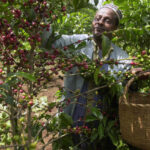
That coffee you slurped this morning? It’s 600,000 years old.
Using genes from coffee plants around the world, researchers built a family tree for the world’s most popular type of coffee, known to scientists as Coffea arabica and to coffee lovers simply as “arabica.”
The researchers, hoping to learn more about the plants to better protect them from pests and climate change, found that the species emerged around 600,000 years ago through natural crossbreeding of two other coffee species.
“In other words, prior to any intervention from man,” said Victor Albert, a biologist at the University at Buffalo who co-led the study.
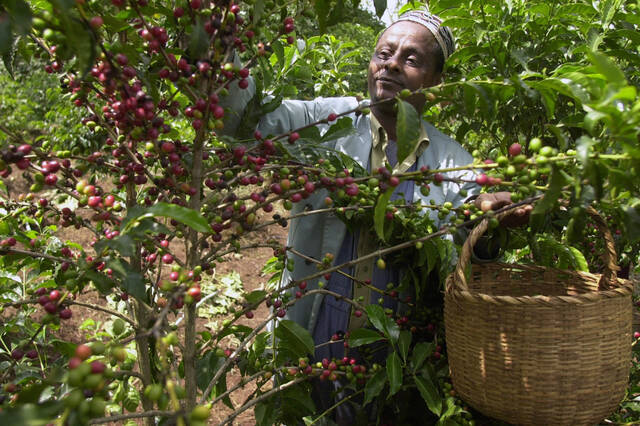
These wild coffee plants originated in Ethiopia but are thought to have been first roasted and brewed primarily in Yemen starting in the 1400s. In the 1600s, Indian monk Baba Budan is fabled to have smuggled seven raw coffee beans back to his homeland from Yemen, laying the foundation for coffee’s global takeover.
Arabica coffee, prized for its smooth and relatively sweet flavor, now makes up 60% – 70% of the global coffee market and is brewed by brands such as Starbucks, Tim Horton’s and Dunkin. The rest is robusta, a stronger and more bitter coffee made from one of arabica’s parents, Coffea canephora.
To piece together arabica coffee’s past, researchers studied genomes of C. canephora, another parent called Coffea eugenioides, and more than 30 different arabica plants, including a sample from the 1700s — courtesy of the Natural History Museum in London — that Swedish naturalist Carl Linnaeus used to name the plant.
The study was published Monday in the journal Nature Genetics. Researchers from Nestlé, which owns several coffee brands, contributed to the study.
The arabica plant’s population fluctuated over thousands of years before humans began cultivating it, flourishing during warm, wet periods and suffering through dry ones. These lean times created so-called population bottlenecks, when only a small number of genetically similar plants survived.
Today, that renders arabica coffee plants more vulnerable to diseases like coffee leaf rust, which cause billions of dollars in losses every year. The researchers explored the makeup of one arabica variety that is resistant to coffee leaf rust, highlighting sections of its genetic code that could help protect the plant.
The study clarifies how arabica came to be and spotlights clues that could help safeguard the crop, said Fabian Echeverria, an adviser for the Center for Coffee Research and Education at Texas A&M University who was not involved with the research.
Exploring arabica’s past and present could yield insight into keeping coffee plants healthy — and coffee cups full — for future early mornings.