Thirteen-year-old Marshall Fee of Scottdale is the rare person who will celebrate a birthday twice in one year. While his regular birthday is in October, his second commemorates the day he received a new heart — which has given him hope for a full life.
Fee, who had suffered from a congenital heart defect, received a heart transplant at UPMC Children’s Hospital of Pittsburgh on Jan. 20.
”We look forward to celebrating his ‘heart birthday’ on that date each year from now on,” said his mother, Molly Fee.
Marshall, a seventh grade student at Southmoreland Middle School, said last week he is feeling better but is not quite back to normal.
“I know I will get there soon. The whole experience in the hospital was hard and traumatizing, bruh,” Marshall said, using a popular slang term, via email. “But there were nice people helping me in there” he reported of his monthlong experience at Children’s Hospital.
Marshall has been home for two weeks but returns regularly to UPMC Children’s for doctor appointments to test his body’s response and track his progress. He goes to clinics and physical therapy sessions, his mother said.
“He will require a lifetime of specialized care, even after he resumes his ‘normal’ day-to-day with school, family and other activities,” Fee said.
Medical research offers hope for Marshall to thrive and resume his normal activities. The pediatric heart transplant survival rate averages 92% for the first year and close to 97% for children Marshall’s age, said Katelyn Metz, a spokeswoman for the Center for Organ Recovery and Education in Pittsburgh.
“We are just taking each day at a time and giving him space to adjust at his own pace,” Fee said. “We’re anxiously awaiting the green light for him to travel long-distance so he can go to visit all the places where his family lives, that he’s never been able to see for himself.”
Congenital heart defect
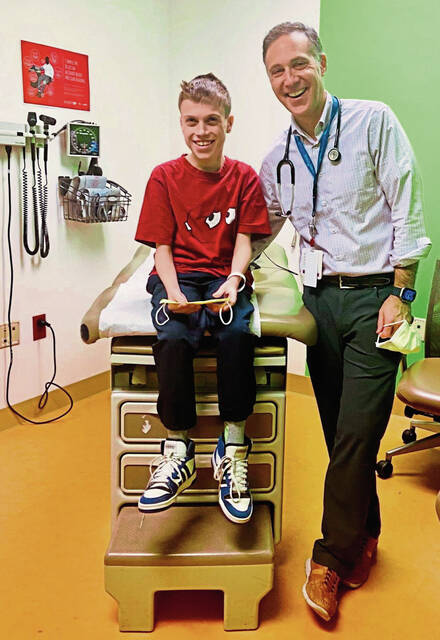
Marshall has been dealing with heart issues since he was born in October 2011 with hypoplastic left heart syndrome, a condition in which there are only two, rather than four, heart chambers. An ultrasound during prenatal screening of his mother determined he had a heart defect, said Dr. Brian Feingold, who is Marshall’s pediatric cardiologist.
When he was born, Marshall went straight from the delivery room into a cardiology unit at Children’s Hospital, where he underwent heart reconstructive surgery in the first day of his life. After three months, he underwent a second procedure to redirect blood flow from his heart to his lungs, thus easing stress on the heart, and then a similar surgery at age 3.
At age 8, he suffered from plastic bronchitis, a condition where lymphatic fluid builds up in the airways and forms caulk-like plugs that block the airway, making it hard to breathe, according to Children’s Hospital of Philadelphia. He underwent a lifesaving Fontan heart procedure to redirect blood flow, but the procedure revealed that his heart would not last a lifetime.
As a result of the respiratory illness that sickened Marshall, he really struggled for the next few years, said Feingold, the medical director of the heart failure and transplantation programs at Children’s Hospital of Pittsburgh. Patients like Marshall are evaluated by the hospital’s cardiologists to determine whether their heart function is compromised to the extent they should be placed on the waiting list.
“We know we are going to introduce risk” with a heart transplant, Feingold said.
When Marshall was placed on the national United Network for Organ Sharing waitlist in April 2023 for a donor heart, Fee said, he was doing relatively well. But, as time went on and he had more difficulty doing normal activities that should have been easy for a boy his age, it became clear he needed a new heart.
The fact that Marshall needed a heart transplant when he got older is not that unusual for children born with heart defects. About one half of the transplants performed at Children’s — which typically does 12 to 16 heart transplants annually — are because of congenital heart defects, Feingold said.
With her son on the heart transplant waiting list, Fee said she was anxious during what turned out to be 21 months before Marshall got the transplant. She expected that the call notifying them that a donor heart had been found could have happened at any moment. The family remained within a four-hour drive of Pittsburgh, to be ready if the call came from the hospital, which is the distance recommended by UPMC.
“The Rock and Roll Hall of Fame in Cleveland became our favorite place to visit when we needed a change of scenery,” Fee said.
She even created a special ringtone on her cellphone for Children’s Hospital. Every time the phone rang, she would panic a little.
“I was always nervous — what if my phone didn’t work for some reason, or what if I forget my phone in the other room,” she said.
The United Network for Organ Sharing and UPMC say wait times vary, with UPMC pointing out that a person’s blood type, height, weight and location may affect a person’s wait time for a transplant.
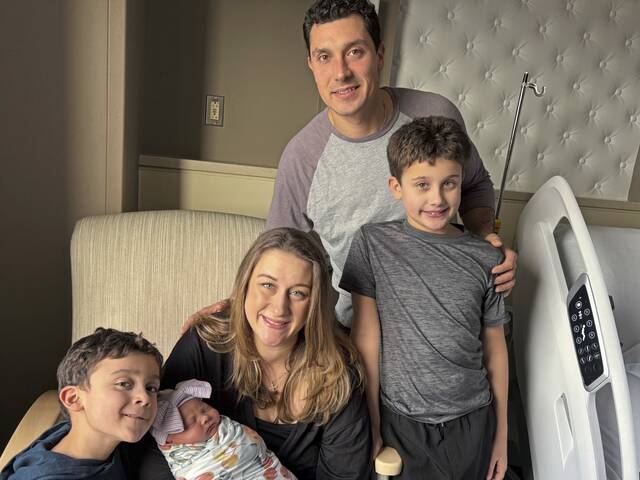
When the call from the transplant team finally came Jan. 19, Fee said she was shaking as she, Marshall and her older son, Wyatt, were on a family video call with relatives across the nation.
“I am so grateful that it happened that way because we were all together — virtually,” said Fee, who described herself as in a bit of shock when the call came.
Her husband, Joe, was working away from the house, and they had to pack when he returned. What followed was “an hour of white-knuckle driving on snowy, icy roads to get to Pittsburgh,” Fee said.
”It really was a dizzying turn of events,” she said.
Tests determined that the donor heart was a good match. The surgery took 9½ hours to complete, not ending until the morning of Jan. 20.
Feingold gave them the great news in the morning that Marshall’s new heart was “beating beautifully,” Fee said. “We were so relieved, but I was still so nervous knowing about the extremely long road to recovery that lay ahead.”
Long recovery
Her son is learning to find his new normal since coming home. He’s managing his new medicines well, Fee said, and appreciating the comforts of his own bed and having his familiar surroundings to help him heal the rest of the way.
It’s unlikely that he will return to school in person this year because he is immunocompromised, but Fee hopes he can pick up some required reading or check in with his teachers and classmates online.
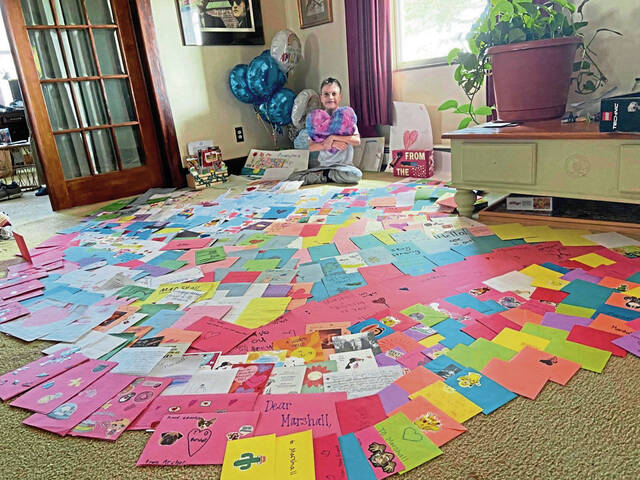
“Marshall is naturally social, so it has meant the world to him to receive all the cards and signs and gifts from his friends and people in the community,” Fee said.
The Southmoreland student looks forward to being in the school environment.
“The biggest test of his new heart will be to see if he can take a spot with his drums in the marching band,” Fee said.
Donors deficit
Whether it is the United Network for Organ Sharing, the Center for Organ Recovery and Education or UPMC, there is a common message: Register to become an organ donor.
“Donor heart availability is difficult to predict,” UPMC said.
More children with heart disease could have an improved quality of life if there were more donor hearts, Feingold said.
“There are many children waiting for organ donors, that can save other lives,” Feingold said. “There is not enough donor organs available for transplant.”
Fee said they are so appreciative of the donor and stressed the importance of people becoming organ donors.
“Marshall’s angel donor is a hero in the very truest sense, giving most generously and selflessly so that a stranger might live after they leave this Earth. It means the world to know people choose to be organ donors,” she said.